UK EV Car Market 2026 Why Electric Cars Are Growing But Drivers Still Worry About Cost
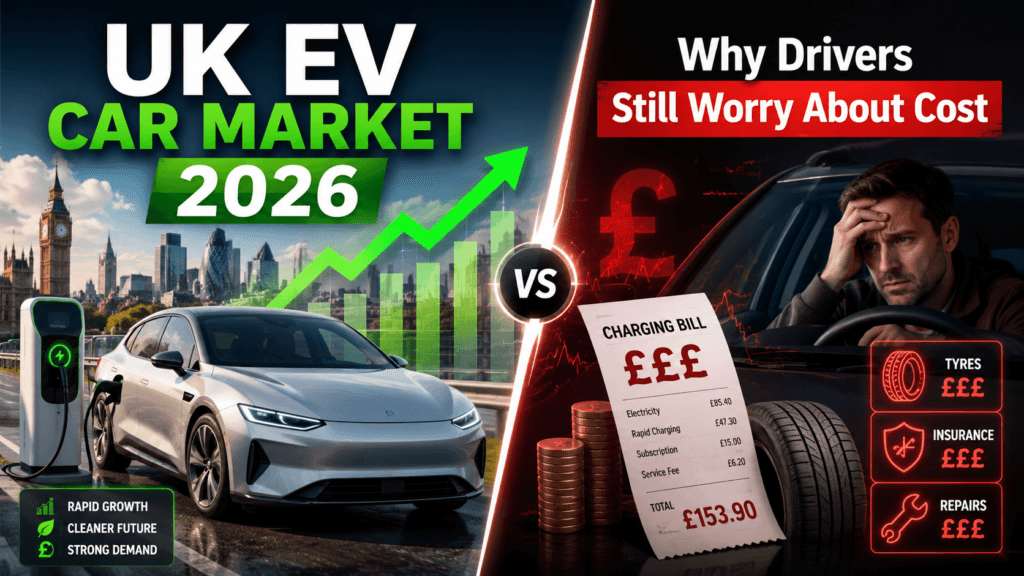
The UK electric car market is growing fast in 2026, but the story is not as simple as “everyone is switching to EVs.” More drivers are considering electric cars because of lower running costs, cleaner technology, government support, and more choice in the market. At the same time, many UK drivers are still worried about the real cost of owning an EV.
The concern is not only the purchase price. Drivers are also thinking about public charging costs, home charging access, insurance, tyre wear, repairs, battery health, and resale value. For many families, an electric car looks attractive on paper, but the monthly budget still matters.
According to SMMT data, battery electric vehicles made up 26.2% of new UK car registrations in April 2026, with BEV registrations up 59.1% compared with April 2025. However, SMMT also reduced its 2026 BEV market share forecast from 28.5% to 26.8%, showing that demand is growing but still facing pressure.
Quick Answer: Why Are EVs Growing in the UK?
Electric cars are growing in the UK because buyers have more model choice, charging infrastructure is expanding, government grants are reducing some upfront costs, and petrol and diesel drivers are looking for cheaper running options. The used EV market is also becoming stronger, making electric cars more accessible to budget-conscious drivers.
But drivers still worry about cost because many EVs remain expensive to buy, public charging can be costly, insurance and repairs can be higher, and EV tyres may wear faster because electric cars are often heavier and deliver instant torque.
The UK EV Market Is Growing in 2026
The UK car market has moved into a new phase. Electric cars are no longer a niche option for early adopters. They are becoming part of normal buying decisions for families, commuters, company car users and city drivers.
SMMT reported that total new car registrations in 2026 are expected to reach 2.093 million, up from the previous forecast of 2.048 million. This shows stronger confidence in the wider car market. But the EV side of the market is more complicated: electric cars are growing, yet not as quickly as some industry targets expected.
One major reason for EV growth is choice. In earlier years, many electric cars were premium models with high prices. In 2026, buyers can choose from small city EVs, family SUVs, company cars, vans and used electric models. More competition from European, Korean and Chinese manufacturers is also pushing prices down in some segments.
Used EVs Are Becoming More Popular
One of the biggest changes in 2026 is the rise of the used EV market. Many drivers who cannot afford a brand-new electric car are now looking at second-hand EVs. This is important because used cars are usually the entry point for many UK households.
SMMT data shows the UK used car market dipped only 0.2% in the first quarter of 2026, while used BEV transactions increased by 32.0%. This means electric cars are becoming more common in the second-hand market, giving drivers more affordable ways to switch.
However, used EV buyers are also cautious. They want to know about battery health, warranty, charging history, range, tyre condition and repair costs. A used EV may look cheap compared with a new model, but if the tyres, brakes, suspension or battery condition are poor, ownership can become expensive.
For Tyre Vortex customers, this is especially relevant. Before buying a used electric car, drivers should check tyre tread depth, uneven wear, sidewall damage, wheel alignment and load rating. EVs can be heavier than petrol cars, so fitting the correct tyres is very important for safety and performance.
Why Drivers Still Worry About EV Cost
Even with growing demand, cost remains the biggest barrier for many UK drivers. The first concern is purchase price. Some EVs are now more affordable than before, but many models still cost more than equivalent petrol or hybrid cars.
The UK government’s Electric Car Grant helps reduce the price of some eligible zero-emission cars. The grant is applied as a discount by the seller, and eligibility depends on vehicle price and sustainability criteria. Government guidance says eligible electric cars can receive support if they meet the scheme requirements, including a price threshold.
But even with a grant, drivers still compare the full cost: monthly finance, insurance, charging, tyres, servicing and resale value. For someone on a tight budget, a lower fuel bill may not fully remove the worry of a higher monthly payment.
Charging Costs Are Not the Same for Everyone
Another major issue is charging. EV ownership is usually cheapest when drivers can charge at home overnight. Home charging can be much cheaper and more convenient than relying only on public chargers.
But not every UK driver has a driveway. Millions of households do not have off-street parking, which makes home charging more difficult. Recent reporting has highlighted that many households face a “postcode lottery” for on-street charging because local council rules differ across the country.
This creates a big cost gap. A driver with a driveway and a good home electricity tariff may save more money. A driver relying mostly on rapid public chargers may pay much more. So two EV owners can have very different running costs, even if they drive similar cars.
Charging Infrastructure Is Improving
The good news is that the UK charging network is growing. Government charging infrastructure statistics reported 119,080 public EV chargers in the UK as of 1 April 2026, including 27,372 rapid or above chargers rated at 50kW or more.
Zapmap also reported that the UK passed the 120,000 public charger milestone, with 120,388 chargers recorded after April’s growth.
This growth is positive for EV confidence. More chargers mean less range anxiety and more convenience for long journeys. However, drivers still care about charger reliability, waiting times, payment systems, public charging prices and availability in rural areas.
EV Tyres Can Cost More Than Drivers Expect
Many drivers focus on the battery and charging but forget about tyres. This is a mistake. Tyres are one of the most important cost and safety factors in EV ownership.
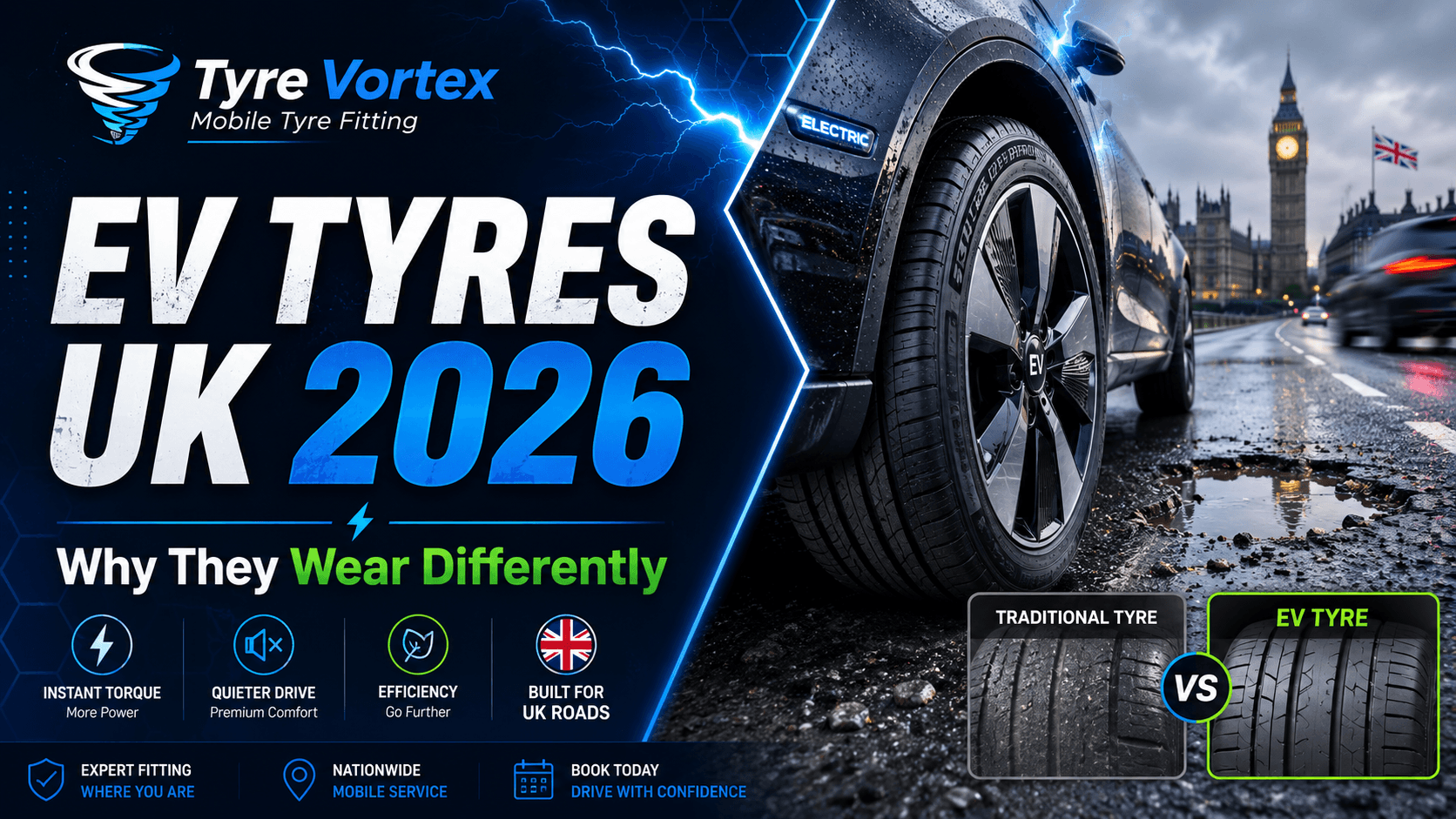
Electric cars are often heavier because of their battery packs. They also deliver instant torque, which can put extra stress on tyres during acceleration. This does not mean EVs are bad for tyres, but it does mean tyre choice, pressure and alignment matter more.
EV drivers may notice:
- Faster tyre wear if pressures are incorrect
- Uneven tread wear due to alignment issues
- Higher tyre replacement costs for specialist EV tyres
- More pressure on tyres from vehicle weight
- Lower range if tyres are worn or underinflated
For UK drivers, this is where Tyre Vortex can help. If you drive an electric or hybrid car and need tyre inspection, replacement or mobile tyre fitting, Tyre Vortex offers convenient support so you do not have to waste time at a garage. Correct tyres can improve safety, ride comfort, braking and efficiency.
Insurance and Repair Costs Add More Pressure
Another reason drivers worry about EV cost is insurance. Some electric cars can be more expensive to insure because parts, repair knowledge and battery-related repairs may cost more. Even small accident repairs can be expensive if specialist parts or trained technicians are needed.
This does not mean every EV is expensive to insure, but drivers should compare insurance before buying. A cheap used EV may not be cheap overall if the insurance quote is high.
Repair costs also matter. EVs generally have fewer moving parts than petrol or diesel cars, but body repairs, sensors, battery checks and software-related diagnostics can still be costly. This is why drivers should look beyond fuel savings and calculate the full ownership cost.
Range Anxiety Is Still Real
EV range has improved, but range anxiety has not disappeared. Many modern EVs offer enough range for daily driving, school runs, commuting and local trips. But drivers still worry about long journeys, cold weather, motorway driving and charger availability.
In winter, EV range can drop because batteries are affected by temperature and drivers use heating more often. Motorway speeds can also reduce efficiency. This means a car advertised with a strong range may deliver less in real-world conditions.
For buyers, the best approach is simple: choose an EV based on your real driving needs, not only the official range figure. A city driver may be perfectly happy with a smaller battery EV. A motorway driver may need a longer-range model and access to fast charging.
Company Car Drivers Are Helping EV Growth
Company car users are one of the strongest groups supporting EV growth in the UK. Electric cars can be attractive for business users because of tax benefits, lower running costs and corporate sustainability targets.
Fleet demand is also helping more EVs enter the used market after lease periods end. This creates more second-hand supply and gives private buyers more choice. Over time, this can help reduce EV prices and make electric cars more normal in the UK used car market.
However, private buyers still need confidence. They want clear pricing, battery health information, reliable charging and affordable maintenance.
Petrol and Diesel Are Not Finished Yet
Even though EVs are growing, petrol and diesel cars are still part of the UK market. Many drivers are not ready to switch because they live in areas with poor charging access, drive long distances, need towing capability, or cannot afford a suitable EV.
Hybrid cars are also popular because they feel like a middle option. Drivers get some electric benefits without fully depending on charging. In 2026, many UK buyers are comparing petrol, hybrid, plug-in hybrid and full electric options before making a final decision.
This shows that the market is changing gradually. EV growth is strong, but the transition is not equal for everyone.
What This Means for Tyre Demand in the UK
The rise of EVs will change tyre demand in the UK. More drivers will need tyres designed for heavier vehicles, lower rolling resistance, quieter performance and strong wet braking. EV tyre quality is especially important because tyre condition can affect range, comfort and safety.
Mobile tyre fitting is also likely to become more important. EV drivers often value convenience, and many prefer services that come to their home, workplace or roadside location. For busy UK drivers, mobile tyre fitting saves time and reduces stress.
Tyre Vortex can position itself as a helpful service for EV and hybrid drivers by offering tyre checks, mobile tyre fitting, emergency replacement and advice on choosing the correct tyres for electric vehicles.
Final Thoughts
The UK EV car market is growing in 2026, but drivers are still asking practical questions. They want to know whether an electric car will truly save money, whether charging will be easy, whether insurance will be affordable, and whether tyre costs will be higher.
The answer depends on the driver. For someone with home charging, regular city driving and access to affordable finance, an EV can make a lot of sense. For someone without off-street parking or with long rural journeys, the cost calculation may be more difficult.
Electric cars are the future of the UK market, but cost, charging and maintenance concerns still need to be solved. For tyre businesses like Tyre Vortex, this shift creates a strong opportunity: helping EV drivers stay safe, reduce tyre wear and choose the right mobile tyre fitting solution.
FAQs
1. Is the UK EV market growing in 2026?
Yes. EV registrations are growing strongly in the UK, and battery electric vehicles reached 26.2% of new registrations in April 2026. However, EV growth is still below some earlier expectations.
2. Why are UK drivers still worried about electric cars?
Drivers are mainly worried about purchase price, charging access, public charging costs, insurance, repair costs, battery health and tyre wear.
3. Are used electric cars becoming popular in the UK?
Yes. Used BEV transactions increased by 32.0% in the first quarter of 2026, showing more buyers are considering second-hand electric cars.
4. Do electric cars wear tyres faster?
Electric cars can wear tyres faster if they are heavy, driven aggressively, or have incorrect tyre pressure or wheel alignment. Correct EV-rated tyres and regular checks can help reduce wear.
5. Can Tyre Vortex help EV drivers?
Yes. Tyre Vortex can help EV and hybrid drivers with mobile tyre fitting, tyre replacement, tread checks and advice on choosing safe tyres for UK roads.