Keeping the right tire pressure is one of the most important parts of taking care of your car, but it’s also one of the most common things that people forget to do. TyreVortex sees all the time how wrong tyre pressure can cause tyres to wear out too quickly, lower fuel efficiency, and even make driving conditions unsafe.
 TyreVortex experts go into great detail about how to use a tyre pressure gauge correctly, why it matters, and how UK drivers can keep their tyres safe all year long in this guide.
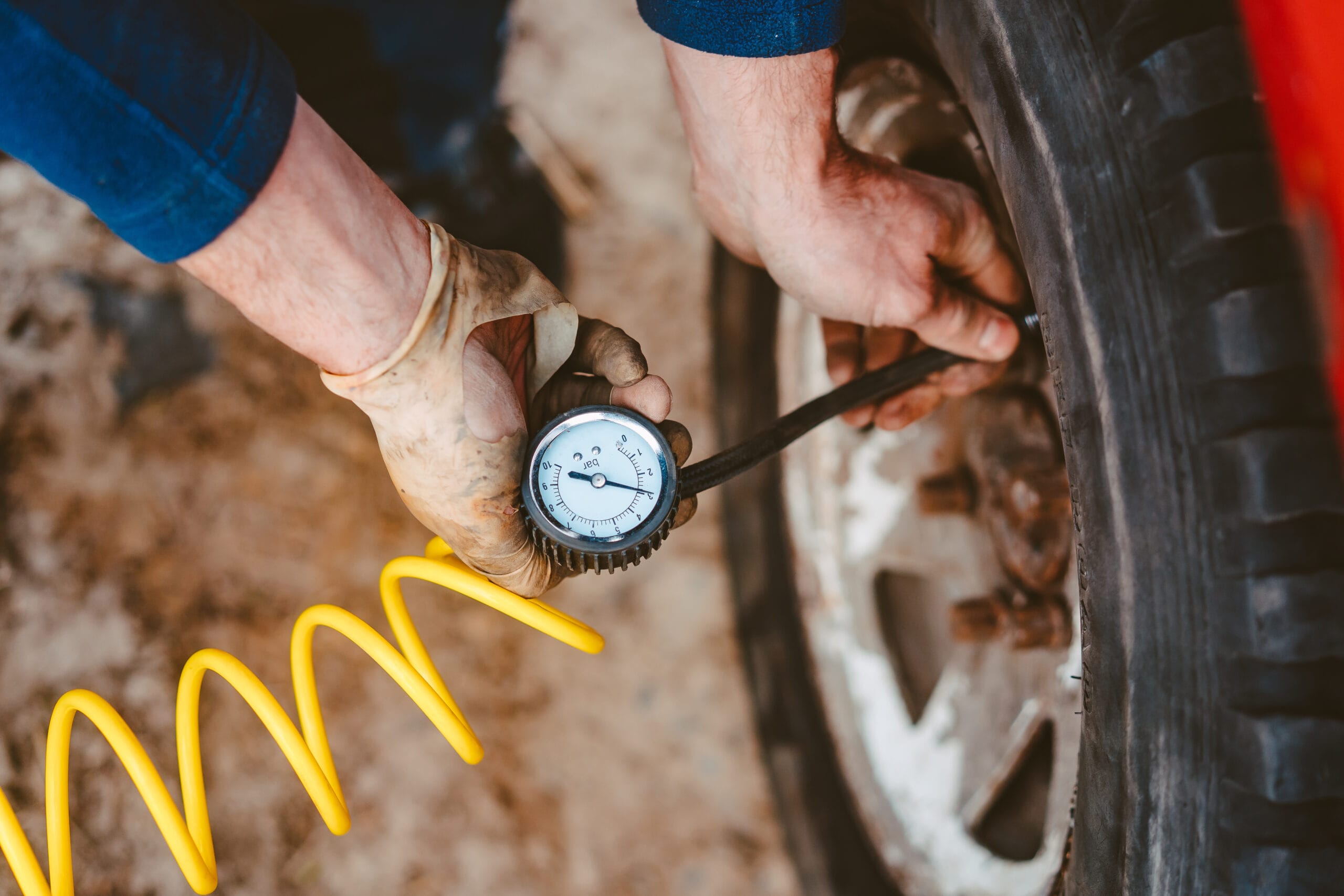
A man pumps air wheel with a compressor on the road
TyreVortex Insight: Why Tyre Pressure Matters
TyreVortex tyre experts say that the wrong tyre pressure can lead to:- Less effective braking
- Bad handling on UK roads when it’s wet
- More fuel used
- Tyres that wear out unevenly or too quickly
- More likely to get flat tires or blowouts
- It’s important to check your tire pressure regularly for safety and performance, whether you drive every day or just sometimes.
What You Need to Check Your Tyre Pressure
TyreVortex suggests that you have the following before you start:- A dependable tyre pressure gauge, whether digital or analog
- The right tyre pressure for your car
- Access to an air pump (if you need to make changes)
- TyreVortex says: For most drivers, digital tire pressure gauges are easier to read and more accurate.
How to Use a Tyre Pressure Gauge in Steps
For accurate results, follow these steps that TyreVortex has approved:- Check the Tyre Pressure
- The tire itself does not say what the right pressure is for your car.
- You can find it here:
- In the frame of the driver’s door
- In the manual for the owner
- Check the Tyres When They’re Cold
- Tyres need to be cold for accurate readings.
- Leave the car parked for at least three hours.
- Don’t check right after driving.
- Take off the valve cap
- Put on the Tyre Pressure Gauge
- Press the gauge firmly straight onto the valve stem.
- It’s normal for there to be a short hissing sound.
- Digital gauges show the reading right away
- A dial or sliding stick on an analogue gauge shows pressure.
- This number tells you how much air is in the tire in PSI or BAR.
- Look at the recommended pressure and compare it.
- Do this for all of the tyres.
- Check all four tires every time.
- The extra tire
- TyreVortex warns that many UK drivers forget their spare tire, which can be a big problem in an emergency.
- Change the valve caps
What Should UK Drivers Use: PSI or BAR?
The most common units for measuring tire pressure are PSI (pounds per square inch) and BAR (a metric unit used in Europe). TyreVortex says to use the unit that your car’s maker says to use.TyreVortex’s Advice on Tyre Pressure for UK Drivers
- Check the pressure in your tires once a month and before long trips on the highway.
- Check more often in the winter because cold weather lowers pressure.
- If you’re carrying a lot of luggage, the load will change the pressure.
TyreVortex Sees These Mistakes All the Time
- Checking the pressure after driving
- Not paying attention to dashboard tire warning lights
- Assuming that all the tires need the same amount of air
- Not doing regular checks
- Avoiding these mistakes can make your tires last a lot longer.
How the Right Tyre Pressure Makes Driving Safer TyreVortex experts say that having the right tire pressure helps with:
- Braking distances that are shorter
- Better grip on UK roads when they’re wet
- Less noise from the tires
- Better response from the steering
- Less likely to have a sudden tire failure