Potholes are more than just an annoying bump in the road. For UK drivers, they can cause serious tyre damage, wheel problems, steering issues, and even dangerous blowouts if ignored. One moment you are driving normally, and the next you hear a loud thud, feel the car jolt, and wonder: “Is my tyre still safe?”
That question matters. The UK’s pothole problem remains a major concern for drivers in 2026. RAC Pothole Index data shows UK drivers are significantly more likely to suffer pothole-related breakdowns than when the index began in 2006, while recent reporting has highlighted a large road repair backlog across England and Wales.
After hitting a pothole, many drivers continue their journey because the tyre still “looks fine” from a quick glance. But tyre damage is not always obvious. A pothole impact can weaken the sidewall, bend the wheel rim, create a slow puncture, damage the tyre structure, or knock the wheel alignment out. Sometimes the warning signs appear immediately. Other times, the problem gets worse over the next few miles or days.
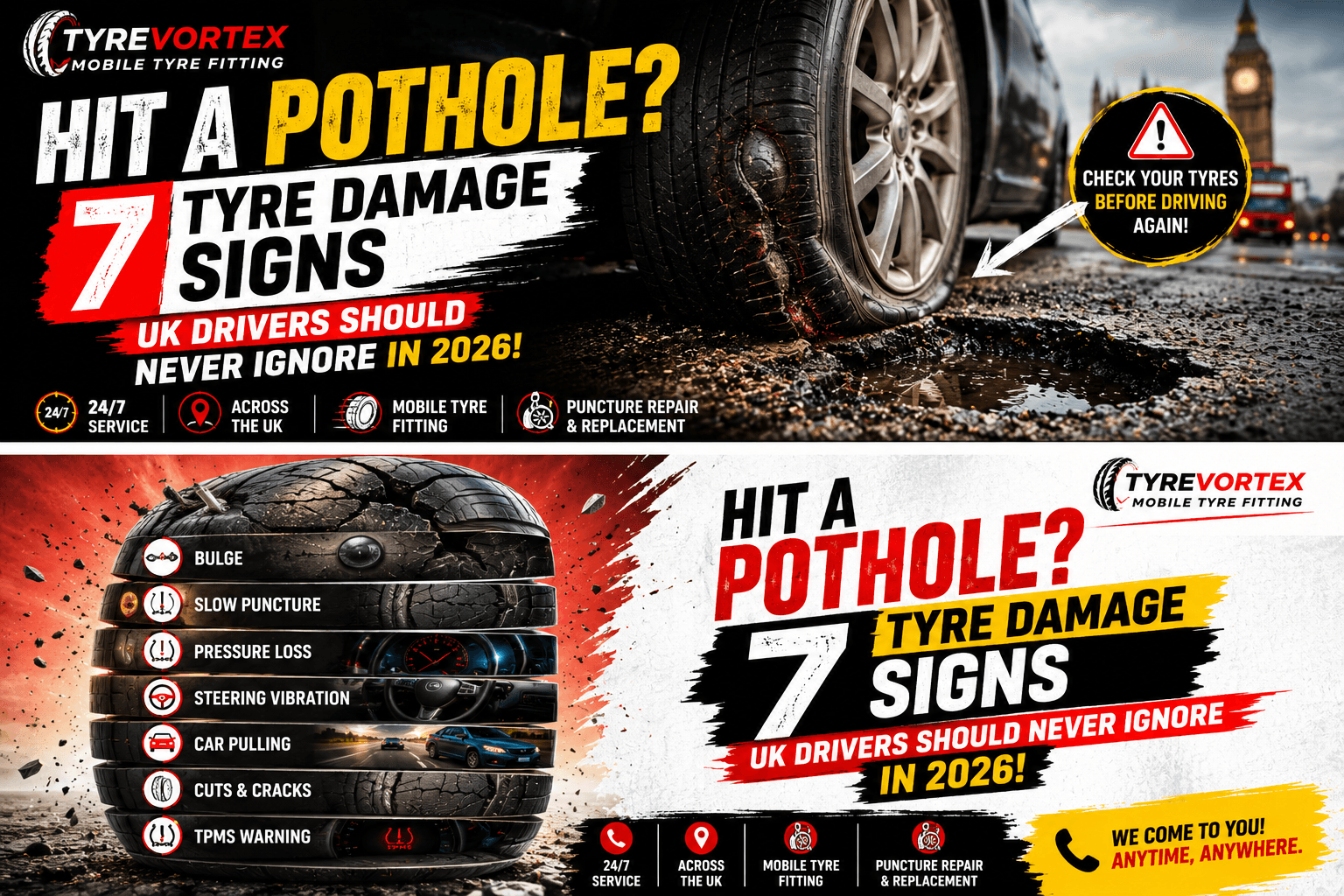
In this guide, TyreVortex explains the 7 tyre damage signs UK drivers should never ignore after hitting a pothole, what they mean, and when to call a mobile tyre fitting or emergency tyre repair service.
Why Potholes Damage Tyres So Easily
Your tyres are the only part of your vehicle touching the road, so they absorb a huge amount of force when you hit a pothole. The impact is even worse if you are travelling at speed, carrying passengers or luggage, driving on low tyre pressure, or using low-profile tyres.
When your tyre drops into a pothole and hits the sharp edge on the way out, the rubber, internal cords, sidewall, wheel rim, and suspension all take a sudden shock. Even if the tyre does not burst immediately, the internal structure may be weakened. This is why you should always check your tyres after a hard pothole impact.
Tyre safety is not just about comfort. UK tyre safety guidance reminds drivers that tyres need enough tread depth, correct pressure, and no dangerous cuts, bulges, or structural damage. The legal minimum tread depth for cars and light vans in the UK is 1.6mm across the central three-quarters of the tyre around the full circumference.
1. A Bulge on the Tyre Sidewall
A tyre bulge after hitting a pothole is one of the most serious warning signs. It usually appears as a bubble or raised area on the sidewall of the tyre. This can happen when the impact damages the inner structure of the tyre, allowing air pressure to push against the weakened rubber.
Do not ignore a sidewall bulge. It means the tyre has lost strength in that area and may fail suddenly while driving. This is especially dangerous at motorway speeds, where a blowout can cause loss of control.
If you notice a bulge, avoid driving further unless it is absolutely necessary to move the car to a safe place. A bulged tyre normally needs replacing, not repairing. This is exactly the type of situation where a mobile tyre fitting service can help because you do not have to risk driving to a garage.
2. Slow Puncture After the Impact
A pothole does not always cause an instant flat tyre. Sometimes it creates a slow puncture, where air leaks gradually over hours or days. You may notice the tyre looks slightly lower than the others, the steering feels heavier, or you need to top up the pressure more often.
Slow punctures are easy to underestimate, but they can become dangerous. Driving on an underinflated tyre increases heat build-up, reduces grip, affects braking, and can damage the tyre beyond repair.
TyreSafe advises that punctures should be examined by a tyre professional, and permanent repairs should only be carried out after proper inspection in line with British Standard AU159.
If your tyre keeps losing pressure after hitting a pothole, do not keep inflating it and hoping for the best. Get it checked by a professional mobile tyre technician.
3. Sudden Loss of Tyre Pressure
A sudden pressure drop is easier to notice. Your tyre may look flat, the car may pull to one side, or your dashboard tyre pressure monitoring system may show a warning.
If this happens, slow down carefully and stop somewhere safe. Do not continue driving on a flat tyre. Driving even a short distance on a fully deflated tyre can destroy the tyre sidewall, damage the wheel rim, and make a repair impossible.
This is where TyreVortex can help UK drivers with 24/7 mobile tyre fitting, puncture repair, and roadside tyre replacement. TyreVortex provides mobile tyre services across the UK and can come to your home, workplace, or roadside location depending on availability and area coverage.
4. Steering Wheel Vibration
If your steering wheel starts vibrating after hitting a pothole, it could mean the wheel is bent, the tyre has internal damage, the balancing has been affected, or the impact has disturbed the suspension.
Vibration is not just uncomfortable. It is a sign that something is not rotating smoothly. The faster you drive, the worse it may feel. In some cases, the tyre may look normal from the outside but have hidden internal damage.
If the vibration starts immediately after the pothole impact, reduce speed and avoid long journeys until the tyre and wheel have been checked. A mobile tyre technician can inspect the tyre condition, check for visible damage, and advise whether replacement is needed.
5. The Car Pulls Left or Right
After a pothole hit, your car may start pulling to one side even when you are holding the steering wheel straight. This can happen because the impact has affected the wheel alignment, tyre pressure, suspension, or wheel rim.
Poor alignment can make your tyres wear unevenly and reduce control, especially in wet weather. It can also increase fuel usage because the tyres are not rolling correctly.
A car pulling to one side should always be taken seriously. First, check whether one tyre has lost pressure. If the pressure looks normal, you may still need a professional inspection. If the tyre is damaged or unsafe to drive on, a mobile tyre fitting service is safer than trying to reach a garage.
6. Cuts, Cracks, or Exposed Cords
After hitting a pothole, inspect the tyre carefully if it is safe to do so. Look for cuts, cracks, splits, chunks missing from the rubber, or any visible cords. Damage on the sidewall or shoulder area is especially serious because this part of the tyre flexes constantly while driving.
A small-looking cut can hide deeper structural damage. If you can see cords or fabric inside the tyre, the tyre is unsafe and should not be used.
Not all punctures can be repaired. UK tyre repair guidance explains that repairs are limited to specific areas of the tyre and must be carried out professionally. Damage outside the repairable tread area, including sidewall damage, is usually not suitable for a standard puncture repair.
7. TPMS Warning Light Comes On
Many modern cars have a tyre pressure monitoring system, often called TPMS. If the TPMS warning light comes on after hitting a pothole, it may mean one or more tyres have lost pressure.
Do not ignore this warning. Pull over safely and check the tyre if possible. If the tyre looks low, flat, or damaged, avoid driving further. If you cannot see obvious damage but the warning remains, the tyre may still have a slow leak or valve issue.
A TPMS warning is useful, but it does not show every type of tyre damage. For example, it may alert you to pressure loss but not always to sidewall weakness, tread separation, or wheel damage. That is why a visual and professional check is still important after a heavy pothole impact.
Is It Safe to Drive After Hitting a Pothole?
It depends on the damage. If the impact was minor and the tyre pressure, steering, and handling all feel normal, you may be able to continue carefully. But if you notice a bulge, pressure loss, vibration, pulling, visible damage, or warning light, you should stop and get help.
As a simple rule: if the car feels different after the impact, something may be wrong.
Do not take risks with tyre damage. A damaged tyre can fail suddenly, especially at higher speeds or during emergency braking. If you are on a motorway or busy road, move to a safe location if possible, switch on hazard lights, stay away from traffic, and call professional assistance.
Can Pothole Tyre Damage Be Repaired?
Some pothole-related punctures can be repaired, but only when the damage is in the correct repairable area and the tyre structure is still safe. Small punctures in the central tread area may be repairable after professional inspection.
However, sidewall bulges, sidewall cuts, large tears, exposed cords, damaged run-flat tyres, and tyres driven while flat usually need replacement. A proper inspection is important because hidden internal damage can make a tyre unsafe even if the outside looks acceptable.
TyreVortex offers mobile puncture repair and mobile tyre fitting services, helping drivers avoid unnecessary garage visits when their vehicle is unsafe to drive.
What Should You Do Immediately After Hitting a Pothole?
First, stay calm and keep control of the vehicle. Do not brake harshly unless necessary. When it is safe, pull over and check the tyre. Look for sidewall bulges, cuts, cracks, low pressure, wheel rim damage, and anything unusual.
Next, pay attention to how the car feels. Is the steering wheel shaking? Is the car pulling to one side? Is there a new noise? Has the TPMS light appeared?
If you are unsure, do not guess. Tyre damage can get worse quickly. Calling a mobile tyre expert is often safer than driving to a garage, especially if the tyre has lost pressure or the sidewall looks damaged.
Why Call TyreVortex After Pothole Tyre Damage?
Tyre problems rarely happen at a convenient time. You might hit a pothole on the way to work, during a school run, late at night, or while travelling on the motorway. TyreVortex is built for these situations.
With mobile tyre fitting, puncture repair, emergency tyre replacement, and roadside tyre support, TyreVortex helps UK drivers get back on the road safely without waiting in a garage queue. Whether your tyre needs inspection, repair, or replacement, a mobile technician can come to your location and provide practical support.
If you have hit a pothole and your tyre feels unsafe, do not continue driving and hope it will be fine. Check the warning signs, stay safe, and contact TyreVortex for professional mobile tyre help.
Final Thoughts
Potholes can damage tyres in ways that are not always visible at first. A small bulge, slow puncture, vibration, or TPMS warning can be the early sign of a serious tyre problem.
The 7 signs to remember are: sidewall bulge, slow puncture, sudden pressure loss, steering vibration, car pulling to one side, visible tyre damage, and TPMS warning light.
If you notice any of these after hitting a pothole, stop driving when safe and get the tyre checked. Your tyres are too important to ignore. For UK drivers who need quick, convenient help, TyreVortex provides mobile tyre fitting, puncture repair, and emergency roadside tyre replacement when tyre problems strike.