Can You Drive on a Slow Puncture – A Complete Safety Guide
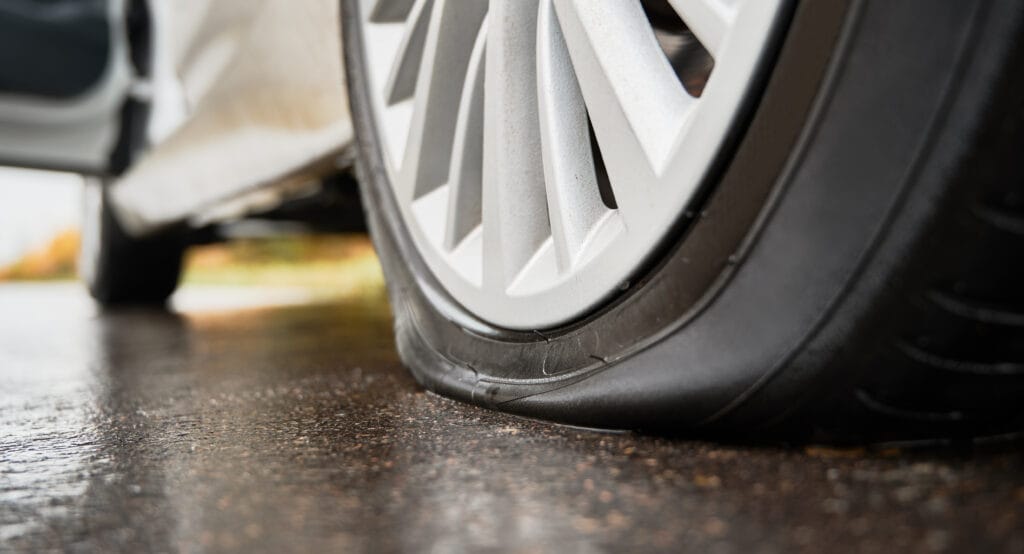
One of the most common problems with tires is a slow puncture. A slow puncture, on the other hand, lets air out slowly, so you might not notice it for days. This makes a lot of drivers wonder, “Can I drive on a slow puncture?”
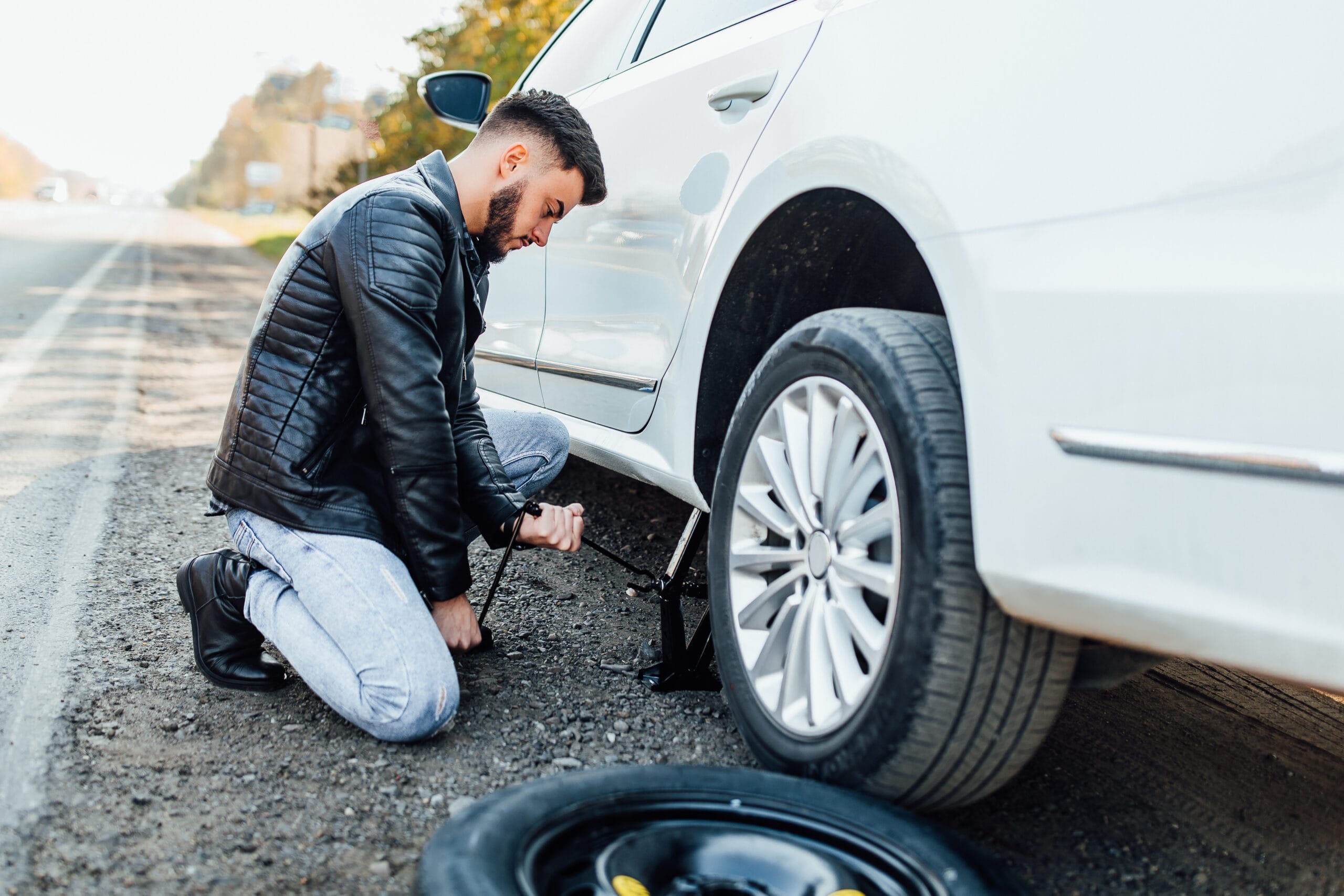
Slow Puncture
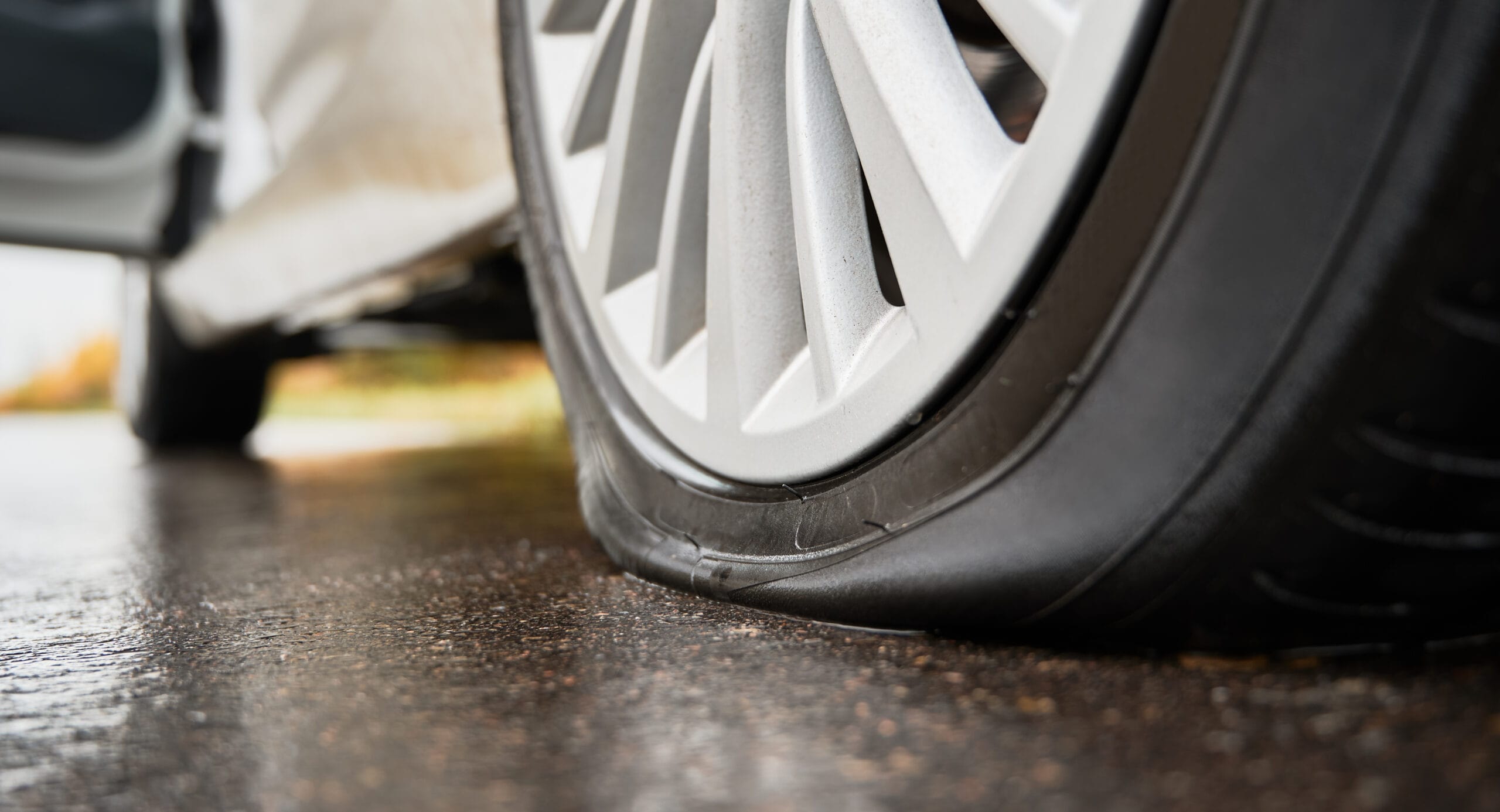
Close-up view of punctured, flat tire on rear wheel of automobile. Fault, damage wheel while driving on asphalt road. Bad luck, accident concept.
In this in-depth guide, we’ll talk about what a slow puncture is, if it’s safe to drive, how much tire pressure is okay, how far you can go, and why you need professional services like Tyrevortex to keep you safe.
What does it mean to have a slow puncture?
A slow puncture happens when a tire loses air slowly over time instead of all at once. Most of the time, this is caused by:
- A little nail or screw stuck in the tire
- A valve stem that is leaking
- The bead on the tire is damaged.
- Rust on alloy wheels
- Wear on tires due to age
- The tyre may look fine at first, but it will lose pressure over time because the air escapes slowly.
Can you drive with a slow leak?
Yes, but only for a very short distance and only in an emergency.
It is possible to drive on a slow puncture, but it is not safe for long or short trips. The tire keeps losing air while you drive, which makes it more likely to fail suddenly.
You should only drive on a slow puncture to get to the nearest tire repair shop, like Tyrevortex. It is not a long-term solution.
Why it’s dangerous to drive on a flat tyre
- Higher Chance of a Blowout
Too much heat builds up when the tires are too low. This can cause a sudden tire blowout at higher speeds, especially on highways.
- Less control and braking
Tyres that aren’t inflated enough:
- Less control over steering
- Make the distance between brakes longer
- Pull the car to one side
- This greatly raises the chance of an accident.
- More Fuel Used
Low tire pressure makes it harder for your engine to roll, which makes it work harder and use more fuel.
- Damage to the wheels and tires that lasts forever
Driving with a slow leak for too long can hurt:
- The sides of the tires
- Structure of the tire inside
- Wheels made of alloys
- In a lot of cases, what could have been a quick fix turns into a full tire replacement.
How much pressure is safe for tyres?
Every car has a recommended tyre pressure from the manufacturer, which you can usually find:
- On the inside of the door frame on the driver’s side
- In the owner’s guide
- 30 to 35 PSI for most passenger cars (depends on the model)
- You shouldn’t drive the car if the tire pressure is more than 5 PSI below the recommended level.
When is it okay to drive with low tyre pressure?
You should only drive if:
- The tire still has enough air in it to keep its shape.
- The pressure is close to the PSI that is recommended.
- You are driving slowly.
- The distance is very small.
You are going straight to a tire store like Tyrevortex. - Don’t go fast
- Highways
- Big loads
How far can you go with a slow leak?
In general, you shouldn’t drive more than 5 to 10 kilometers, and only to get to the nearest tire repair shop.
Driving more than this distance greatly raises the risk of tire failure and expensive damage.
Signs That a Puncture Is Getting Worse
These are some things to look out for:
- Tires lose pressure often
- Light for low tire pressure (TPMS)
- Car pulling to one side
- Steering is hard
- Less efficient use of fuel
If you don’t pay attention to these signs, you could put your safety at risk.
What Makes a Slow Puncture Happen?
Some of the most common reasons are:
- There are small foreign objects in the tire.
- Bad valve cores
- Bad tire fitting
- Tyres that are worn out
- Holes in the road that cause damage
The only sure way to find out what caused the problem is to have a professional look at it.
Should you fix it or buy a new one?
There are a few things that will determine if a slow puncture can be fixed.
You can fix a tire if:
- The hole is in the middle of the tread area.
- The hole is less than 6mm wide.
- The sidewall is fine
- If the puncture is on the sidewall, you need to replace the tire.
The tire has been driven on while it was very low on air. - There has been damage inside.
Why should you choose Tyrevortex to fix a slow leak?
Tyrevortex is an expert at checking tires, fixing flat tires, and replacing tires. Their skilled technicians:
- Find air leaks with precision
- Look for damage on the inside of the tire
- Get the right amount of air in the tires again.
- Suggest safe and cheap ways to solve problems
Having professionals check your tires makes sure you’re safe and stops more damage from happening.
FAQs: Is it safe to drive with a slow puncture?
- Is it safe to drive every day with a slow leak?
No. Driving every day with a slow leak is dangerous and could cause your tires to fail suddenly.
- How long does it take for a slow puncture to go flat?
It depends on how big the leak is. Some slow punctures take hours to fix, while others take days.
- Is it possible for a slow puncture to heal on its own?
No. A slow leak needs to be fixed by a professional or the tire needs to be replaced.
- What should I do if the light that says “tyre pressure” comes on?
Check the pressure in your tires right away and go to a place like Tyrevortex to get them fixed.
- Is it safe to drive on a repaired slow leak?
Yes, it is safe to use if it is fixed properly and there is no damage inside the tire.
If you suspect a slow puncture, do not take unnecessary risks by continuing to drive. Even a small loss of tyre pressure can lead to serious safety issues if ignored.
Tyrevortex offers expert tyre inspections, reliable puncture repairs, and professional advice to keep your vehicle safe on the road. Our experienced technicians can quickly identify the problem and recommend the safest and most cost-effective solution.
Visit Tyrevortex today or book a tyre check to ensure your tyres are properly inflated, road-ready, and safe for every journey.