Electric cars are becoming more common on UK roads, and that means one thing many drivers are now discovering that EV tyres can wear differently from petrol or diesel car tyres. The reason is simple. Electric vehicles are usually heavier, deliver instant torque, and use regenerative braking, all of which can put different pressure on tyres.
In April 2026, the UK reached a major electric vehicle milestone, with the two millionth battery electric car registered and EVs taking a 26.2% share of new car registrations for that month, according to SMMT. This growth means more UK drivers now need to understand how EV tyres work, how long they last, and when they should be replaced.
For drivers who need fast help at home, work, or roadside, Tyre Vortex provides mobile tyre fitting in the UK, helping EV owners replace damaged or worn tyres without visiting a garage.
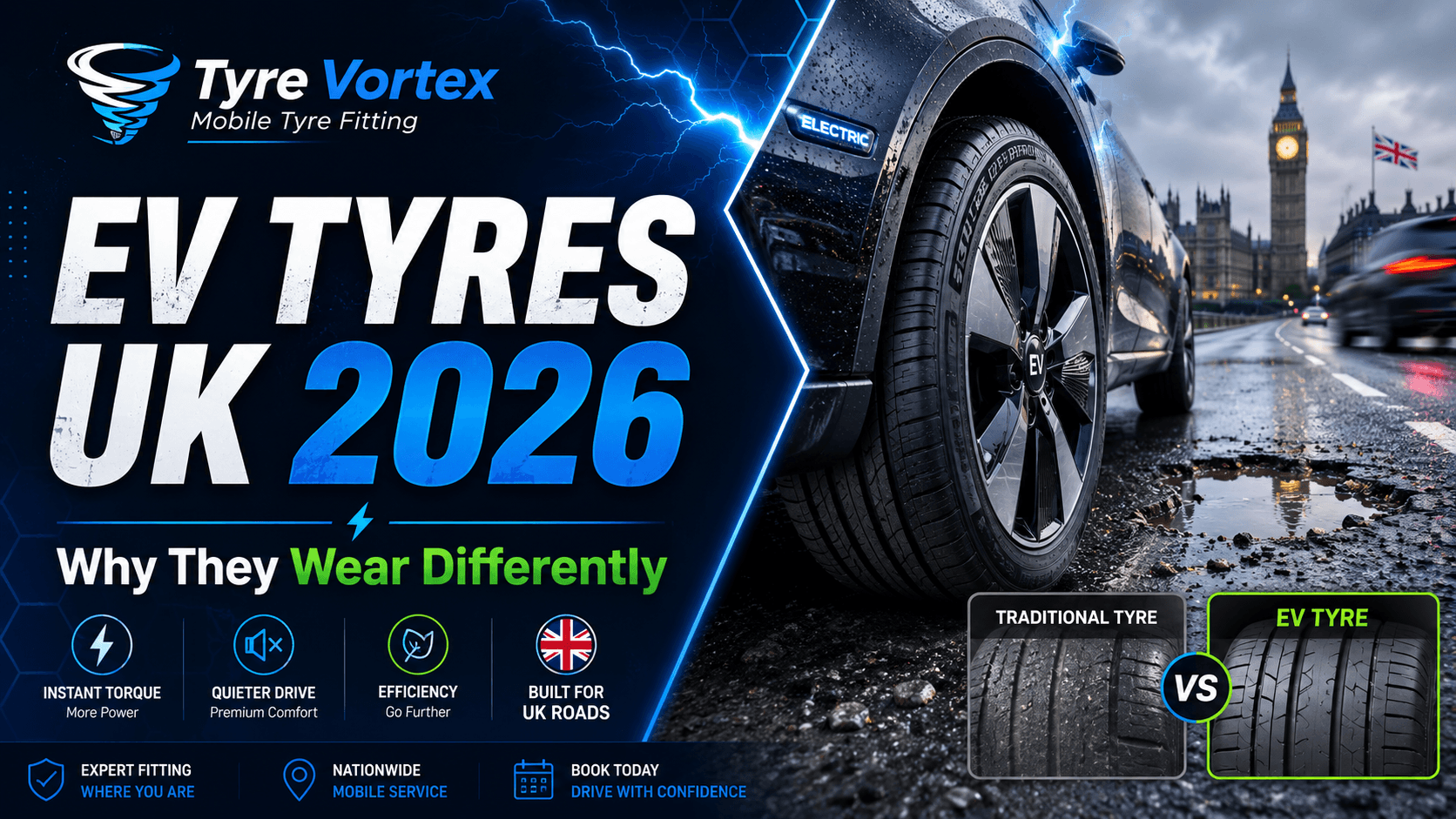
Why Do EV Tyres Wear Differently?
EV tyres wear differently because electric cars are generally heavier than petrol cars, produce instant power from the motor, and place extra stress on tyres during acceleration, braking, and cornering. TyreSafe also advises EV owners to pay close attention when replacing tyres because EV tyres can be different from standard tyres and must match the correct specification.
That means fitting the wrong tyre on an EV may affect safety, range, noise levels, and tyre life.
1. Electric Cars Are Heavier Than Petrol or Diesel Cars
The battery pack is one of the biggest reasons EVs are heavier. A heavier vehicle puts more pressure on the tyres every time the car moves, stops, turns, or hits a rough road surface.
This extra weight can increase tyre wear, especially on the outer edges and front tyres. In normal driving, this may not feel obvious at first, but over time the tread can reduce faster than expected.
For UK drivers, this matters even more because many roads have potholes, speed bumps, wet surfaces, and uneven urban roads. A heavier EV hitting a pothole can put strong impact force through the tyre sidewall and wheel.
2. Instant Torque Can Wear Tyres Faster
Electric cars deliver power instantly. In a petrol or diesel car, power usually builds gradually. In an EV, the motor can send strong torque to the wheels as soon as the driver presses the accelerator.
This makes EVs feel smooth and quick, but it can also increase tyre stress. Fast starts, sharp acceleration, and heavy urban driving can all increase tyre wear.
This does not mean EVs are bad for tyres. It simply means EV drivers need to be more aware of driving style. Gentle acceleration can help tyres last longer and improve driving range at the same time.
3. Regenerative Braking Changes Wear Patterns
Most EVs use regenerative braking. This system slows the vehicle by recovering energy and sending it back to the battery. It is useful for efficiency, but it can also create different tyre wear patterns compared with traditional braking.
If a driver uses strong regenerative braking often, tyres may experience extra load during slowing down. In some EVs, this can contribute to uneven wear, especially if tyre pressure, wheel alignment, or suspension condition is not correct.
This is why regular tyre checks are important for EV owners. A tyre may look fine from a distance but still have uneven shoulder wear or inner-edge wear.
4. EV Tyres Are Designed for Load, Noise and Range
EV tyres are not only about tread depth. They are often designed to handle heavier vehicle loads, reduce road noise, and support better battery range.
Because electric cars are quieter than petrol or diesel cars, tyre noise becomes more noticeable inside the cabin. EV-specific tyres often use special tread patterns or materials to reduce rolling noise.
They may also be designed with lower rolling resistance. Lower rolling resistance helps the car use less energy, which can support better range. However, drivers must still choose tyres that match the vehicle manufacturer’s recommended size, load rating, and speed rating.
TyreSafe warns that EV owners should replace tyres with the correct specification, because the wrong tyre can affect range, noise, wear, and safety.
5. Wrong Tyre Pressure Can Reduce EV Range
Tyre pressure is important for every car, but it is even more important for EVs. If tyres are underinflated, the car has to work harder to move. That can reduce range and increase tyre heat and wear.
Underinflated tyres can also damage the sidewall and make the vehicle feel less stable. Overinflated tyres are also a problem because they can reduce grip and cause the centre of the tread to wear faster.
EV owners should check tyre pressure at least once a month and before long journeys. Always use the pressure recommended by the vehicle manufacturer, not the number printed on the tyre sidewall.
6. UK EV Drivers Should Watch Tread Depth Closely
The UK legal minimum tread depth for car tyres is 1.6mm across the central three-quarters of the tyre and around the full circumference. TyreSafe also advises that for better performance and safety, especially in wet or icy conditions, drivers should consider replacing tyres when they reach around 3mm.
This is important because EVs can be powerful and heavy. In wet UK weather, worn tyres may increase stopping distance and reduce control.
Drivers should check:
- Tread depth
- Cracks or cuts
- Bulges on the sidewall
- Uneven wear
- Nails, screws, or embedded objects
- Vibration while driving
- Pulling to one side
If any of these signs appear, the tyre should be inspected quickly.
7. Potholes Can Damage EV Tyres More Seriously
UK potholes are a major tyre problem for all vehicles, but EVs can be more vulnerable because of their weight. A hard pothole impact can cause sidewall bulges, wheel damage, slow punctures, or alignment issues.
Sometimes the damage is not visible immediately. A driver may hit a pothole and continue driving, only to notice vibration, pressure loss, or uneven wear days later.
After a pothole impact, EV drivers should check all four tyres and wheels. If the steering wheel shakes or the car pulls to one side, the vehicle may need alignment and tyre inspection.
This is where Tyre Vortex mobile tyre fitting can help. Instead of driving on a risky tyre to a garage, drivers can book mobile tyre fitting and get tyre support at home, work, or roadside.
8. EV Vans and Fleet Tyres Will Become More Important
EV tyre demand is not only about private cars. Electric vans are also growing in importance. The UK government has discussed regulatory flexibility for zero-emission goods vehicles, noting that extra battery weight can push some vehicles above the 3.5-tonne threshold.
This matters for tyre businesses because electric vans usually carry heavy loads and cover high mileage. Delivery fleets, tradespeople, and business users will need more frequent tyre inspections and replacements.
For Tyre Vortex, this creates a strong opportunity in mobile tyre fitting for EV cars, electric vans, and fleet vehicles.
Signs Your EV Tyres Need Replacing
EV owners should not wait until a tyre fails. Replace or inspect tyres when you notice:
- Tread depth close to 3mm or below
- Uneven wear on inner or outer edges
- Sidewall bulges
- Repeated pressure loss
- Cracks or cuts in the rubber
- Poor grip in rain
- More road noise than usual
- Vibration at higher speeds
- Tyre damage after hitting a pothole
- Warning light for tyre pressure
A tyre problem can become dangerous quickly, especially on motorways, wet roads, or long journeys.
How to Make EV Tyres Last Longer
EV tyres can last longer with the right care. Drivers should:
- Accelerate smoothly
- Avoid harsh braking where possible
- Check tyre pressure monthly
- Rotate tyres if recommended by the manufacturer
- Check wheel alignment once a year
- Avoid overloading the vehicle
- Inspect tyres after pothole impacts
- Use tyres with the correct EV rating, load rating, and size
TyreSafe recommends regular pressure checks, wheel alignment and balancing, tread depth checks, and visual inspections for EV tyre maintenance.
Why Mobile Tyre Fitting Helps EV Drivers
Mobile tyre fitting is becoming more useful for EV owners because many tyre problems happen at inconvenient times. A driver may notice a flat tyre at home, a slow puncture at work, or tyre damage after hitting a pothole.
Instead of waiting at a garage, Tyre Vortex can provide mobile tyre fitting across the UK, helping drivers save time and avoid driving on unsafe tyres.
Mobile tyre fitting is useful for:
- Flat tyres
- Punctures
- Worn EV tyres
- Tyre replacement at home
- Workplace tyre fitting
- Emergency tyre support
- Fleet tyre replacement
- Pothole tyre damage
For EV drivers, choosing the right tyre is important. Tyre Vortex can help drivers replace tyres with suitable options based on vehicle size, load rating, and driving needs.
Final Thoughts
EV tyres are not exactly the same as normal tyres. Electric cars are heavier, deliver instant torque, and use regenerative braking, which can all affect tyre wear. As EV numbers grow in the UK, tyre maintenance will become even more important for safety, range, and driving comfort.
The best approach is simple: check tyre pressure regularly, inspect tread depth, avoid harsh acceleration, and replace tyres before they become unsafe.
For fast and convenient support, Tyre Vortex offers mobile tyre fitting in the UK, helping EV drivers replace tyres at home, work, or roadside without the stress of visiting a garage.